The scenario where President Trump cuts a deal with Iran and oil markets quickly normalize is becoming less likely by the day.
That matters because it’s the very scenario keeping US producers from expanding production to capture today’s higher prices.
I routinely talk with oil & gas executives about the market. And as you’d imagine, recent conversations are almost all about geopolitics.
These senior leaders, and the traders driving the markets, are understandably hesitant to fundamentally recalibrate around all the disruption created by the Iran War.
The instinct is reasonable.
We saw the same patterns with tariffs, where announcements of punitive action were defused through negotiation.
Why wouldn’t Iran follow the same script?
One key difference is the tariff developments were largely bilateral. The US and a trade partner needed to work through a particular challenge.
Likewise the US military action in Venezuela had very little collateral effect outside of Venezuela. The operation was narrowly scoped and quickly completed.
What has happened in Iran the last six-plus weeks is very different.
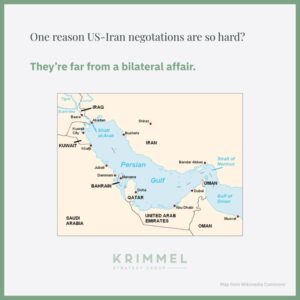
Even if the US and Iran negotiate an agreement, there is no guarantee Saudi Arabia and the other Gulf Cooperation Council (GCC) members will find the deal acceptable.
It’s far from a bilateral affair.
If the US and Iran agree to jointly control the Strait of Hormuz, there is considerable risk the GCC will find the deal unacceptable.
The war has turned GCC economies upside down. An enduring resolution must ensure a path for these countries to recover in short order.
Said differently, even if the US finds a palatable way to end its participation, regional tensions could remain inflamed in a way that delays or prevents a quick, complete market recovery.
Then there’s the physical damage. Qatar’s Ras Laffan LNG site, for example, needs considerable repair before it returns to pre-war condition. No amount of negotiation can compress that timeline.
Not wanting to get out over your skis is a noble goal for any capital allocator. Don’t overreact to near-term market developments that may unwind in short order.
After more than six weeks of war and a temporary ceasefire, evidence is building that these price disruptions will remain for months, if not a year or more, into the future.
A big question is what milestones US E&Ps want to see before they steer capital toward production uplift, even in subtle ways.