Energy executives are not celebrating $100 oil, even though it helps their businesses. And it’s not just about bad optics.
On Saturday I spoke in front of the Texas A&M Professional MBA cohort here in Houston.
One of the students had a great question: how are high-profile energy executives navigating the turbulence driving oil to $100 per barrel?
I started off with the understanding that no one is celebrating oil prices at these levels, even if it means more cash flowing into their business.
Yes, it’s bad optics to high five over larger profits while a war’s going on.
But that’s a relatively small reason for the lack of revelry.
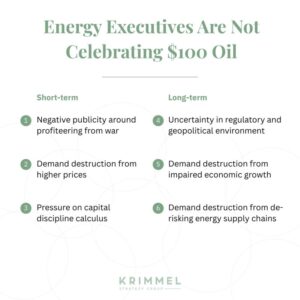
Here are six reasons why executives are more than a little uneasy over today’s market:
1️⃣ Short-term negative publicity around profiteering from war
People are dying. Infrastructure is getting destroyed. The costs are grim, and whatever recovery happens afterward will be long and painful. You don’t want to draw attention to any benefit your business may capture as a result.
2️⃣ Short-term demand destruction from higher prices
High gasoline, diesel, and jet fuel prices will suppress consumer spend, reducing demand for products that require oil as a feedstock.
3️⃣ Short-term pressure on capital discipline calculus
US producers spent years rebuilding investor trust through capital discipline. A price spike creates pressure to chase production growth, exactly what they promised not to do.
4️⃣ Long-term uncertainty in the regulatory and geopolitical environment
Does the US introduce new export restrictions? Are more national security-inspired regulations imposed on the industry? Does the federal government take active ownership stakes here like it did with critical minerals?
5️⃣ Long-term demand destruction from impaired economic growth
All war destroys wealth. It has other aims, but an undeniable outcome is wealth destruction. Capital that would have gone to economic growth will now go to rebuilding destroyed infrastructure and replenishing munitions. The broader economy suffers.
6️⃣ Long-term demand destruction from de-risking energy supply chains
7 billion people live in net oil-importing countries. The Iran War is a visceral reminder of the risk of depending on imported oil. On the margin, more countries will invest more aggressively in pivoting their energy mix away from oil than they otherwise would have.
Yes, oil prices have spiked, and oil producer profitability will expand.
But this is a case where a very near-term gain may quickly be overwhelmed by delayed long-term pain.