
Greenland. Venezuela. Panama. One word describes the Trump administration’s foreign policy: transactional.
There are no allies or adversaries in this worldview.
Only counterparties.
Each engagement involves assessing your own interests, identifying what leverage you have, and maximizing what you can capture.
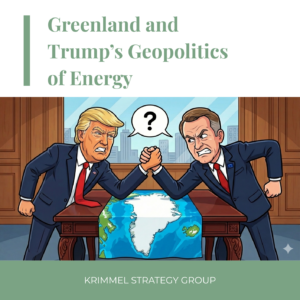
Tariffs on eight NATO allies over Greenland are consistent with this approach.
Now, there’s nuance here. Proximity still matters.
The Venezuela action was partly about expelling Chinese influence from the Western Hemisphere and blunting Cuba.
Greenland is in large part about securing American positioning in the Arctic.
It’s transactional polish on the traditional Monroe Doctrine.
Geography creates 𝘪𝘯𝘵𝘦𝘳𝘦𝘴𝘵𝘴. But it doesn’t create 𝘢𝘭𝘭𝘪𝘢𝘯𝘤𝘦𝘴 in this worldview.
For energy markets, the implications are significant.
Energy has always been a geopolitical lever. That’s not new.
What’s new is the level at which the calculus happens.
The traditional approach is to classify countries as allies or adversaries, then shade energy flows accordingly.
Favorable terms for allies. Restrictions for adversaries. The relationship determines the deal.
The transactional approach is to start each engagement from zero.
The deal determines the relationship.
LNG exports to Europe aren’t shaped by decades of alliance. They’re shaped by what Europe brings to 𝘵𝘩𝘪𝘴 negotiation.
Every barrel, every cargo, every contract becomes a discrete transaction, evaluated on its own terms, not on the accumulated context of who’s been on our side.
Energy executives are used to thinking in decades. This administration thinks in deals.
That gap will define energy diplomacy for the foreseeable future.