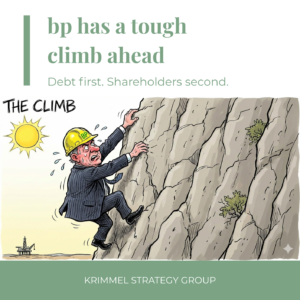
bp’s stock price dropped 6% on Tuesday. The reason? One sentence in their earnings release.
===
“The board has decided to suspend share buybacks, allocate excess cash to strengthen the balance sheet and accordingly, the guidance for shareholder distributions to be around 30-40% of operating cash flow is now retired.”
===
Shareholders confirmed exactly what they expect from oil producers in 2026.
For a little context, ExxonMobil and Chevron opened flat on Tuesday. So the bp drop isn’t a sector-wide pullback.
For further context, Chevron has promised (and delivered) 45% of cash from operations to shareholders.
bp can’t even confidently cross the 30% threshold.
bp’s balance sheet is carrying the weight of their renewables pivot. They spent billions on wind, solar, and hydrogen projects over the past 5-7 years.
The debt came. The cash flows didn’t.
Now they’re stuck. The strategic pivot didn’t generate the returns needed to service the debt it created.
Another part of the story: oil demand growth is slowing.
Even OPEC’s bullish forecast shows growth at half of historic rates. ExxonMobil sees demand plateauing in the next decade.
That changes what investors want. If the pie isn’t growing, they want cash now. Not promises about the future.
bp is using the best remaining demand growth years to pay down debt instead of returning cash to shareholders, which impairs the equity investment thesis.
That’s why bp’s stock price is falling today.
Even if shareholders enthusiastically believe management’s pivot back to hydrocarbons, the stock price won’t benefit if the cash instead goes to creditholders.
bp’s stock price is telling us what investors believe: strategy matters less than cash delivery.
You can pivot to renewables. You can pivot back to hydrocarbons. But if your balance sheet can’t support shareholder distributions, the equity story breaks.
The question now: is the cash program fixable in 2-3 years, or is bp carrying a structural disadvantage that persists into the next decade?