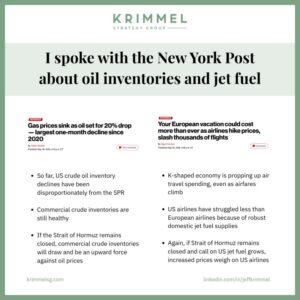
I spoke with The New York Post twice recently. Once about plunging crude oil inventories. The other about what’s happening with jet fuel.
The broader oil conversation is steering strongly toward inventories.
The draws have been dramatic. And the longer the Strait of Hormuz remains closed, the more pressure we’ll see on inventory levels.
To this point, though, the bulk of the draws in the US have been from the Strategic Petroleum Reserve. Commercial inventories are still historically healthy.
But that can change quickly, given that we’re going into summer driving season here in North America, and the opening of the Strait does not appear imminent.
The jet fuel side is posing an acute problem for Europe, which needs to supplement domestic production with imports to meet its own needs.
The imports piece is problematic.
Here in the US, we have a little more of a buffer, given the abundance of our domestic production.
But as the Strait squeeze continues, the international call on all US finished petroleum products will keep growing. And that’s going to weigh on US airlines.
The market is looking for every reason to bid oil prices down.
Each statement from the Trump administration about how close we are to a deal is met with more downward pressure on oil prices.
And yet, if flows out of the Strait of Hormuz don’t increase meaningfully, we won’t get relief in the physical markets, no matter how much the financial markets want all of this to go away.
Summer is very much here. And the squeeze on global oil markets keeps tightening.