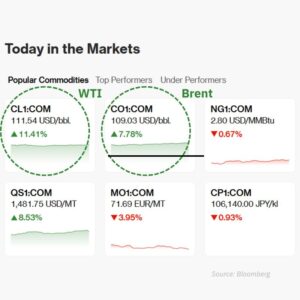
President Trump addressed the nation Wednesday night. And on Thursday, WTI prices raced ahead of Brent. That’s not a coincidence.
There are at least two dynamics at play.
First, traders are flocking to WTI’s security.
President Trump said he expects combat operations to intensify in Iran over the next few weeks.
The increased intensity risks further Iranian retaliation, which can threaten oil infrastructure and supply chains tied to Brent-indexed crudes.
WTI faces no similar security issues. The confidence around its future deliverability is driving its price upward.
Second, US refiners are competing with international buyers for WTI.
Crack spreads are wide. Refiners are running their facilities at full tilt.
International buyers have to pay to get WTI from Cushing to the coast, and then load it onto vessels.
Domestic refiners avoid all that cost. So refiners can effectively outbid international buyers, driving up WTI prices.
The overarching takeaway is that President Trump made it clear that he expects the war to continue for at least two to three more weeks, with real risk of further escalation in that window.
That pulls buyers into WTI. Brent-indexed crudes look more vulnerable and potentially more scarce.
So even though you’d have to pay more for WTI in Cushing, and then pay even more to get it to the coast and onto a vessel, you may be willing to do that if you’re confident you’ll actually receive the oil.
With Brent-indexed crudes, there is considerably less certainty around future availability.
And as you know if you’ve followed oil prices over the past five weeks, that assessment can change in a hurry.